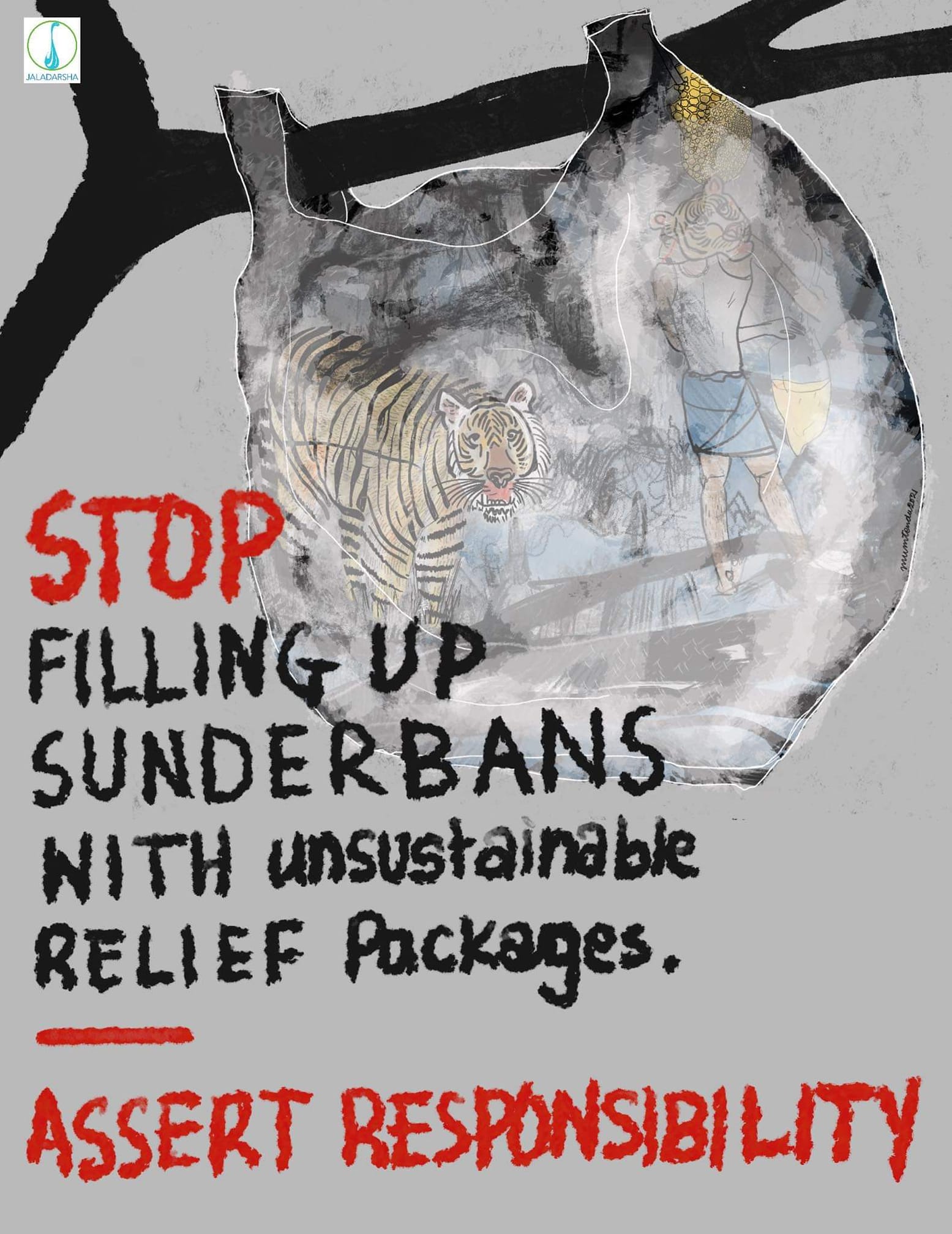
The need of the hour is to repurpose and reassign our thoughts to save the land from further degradation.
Chaiti Nath
Since the Amphan had hit along with the raging pandemic, and the very recent Yash cyclone, the Sundarbans have been receiving a considerable amount of assistance from various quarters. The ongoing donation drives, and health camps by generous individuals, NGOs, and philanthropic institutions have concentrated around these fragile embankments and the perilous fronts of the delta. However, even if each of these initiatives is a commendable gesture, the need of the hour is to repurpose and reassign our thoughts to save the land from further degradation.
We shall begin this conversation with a simple statistical report retrieved from Ananda Bazar Patrika, dated 12th June 2021. It asserts that each day around 5 donation drive collectives reached Hingalganj as reported by the Rupmari Panchayat to serve at least 400 to 500 vulnerable families. Most of the time, the packages arrived in polythene bags which means each week no less than 14,000 polythene bags were being discarded. This count gives us an idea about the situation in the delta shores where the interest of the donation initiatives operates at its peak.
The role of local administration is converse in this case. They are trying to cease the accumulation of plastic wastes in many areas along with spreading awareness on using alternative packaging. In some places there are instances where complaints are being raised owing to the accrual of plastic pouches containing drinking water distributed by the administration itself. There is no doubt that the misfortunate that the population in Sundarbans is facing is tragic and philanthropic advances are needed. However, it is time to rethink the medium of aid distribution to save the marginalized from yet another ecological disaster.
The mangrove is anyway exposed to the harshest natural calamities, afforestation, and steady land erosion that are directly affecting the residents. In addition, channels of waste from Kolkata flow into the Sundarbans every year, and often plastics deposit themselves on the mangroves choking them.
These polybags have already pervaded the entire area; the bags transport themselves along with the flowing water and choke channels and river beds. The aquatic life in these waters are jeopardized. It is high time that we realize that delivering donation aids in polybags to the Sundarbans is equivalent to injecting venom into our entire organic system.
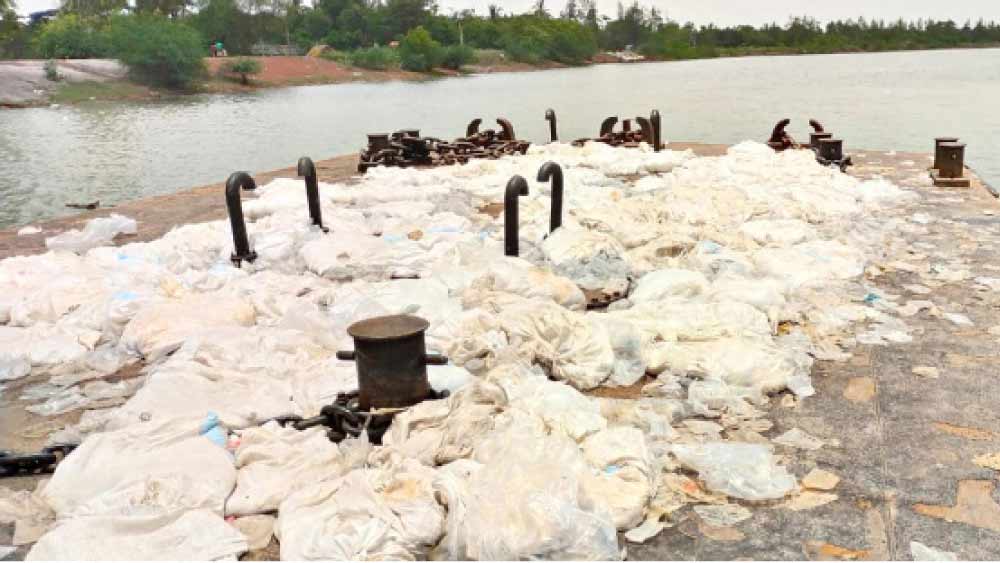
The mangrove is anyway exposed to the harshest natural calamities, afforestation, and steady land erosion that are directly affecting the residents. In addition, channels of waste from Kolkata flow into the Sundarbans every year, and often plastics deposit themselves on the mangroves choking them. Innocent lives are now forced to become communities of ‘Climate refugees’ or ‘Environmental migrants’ shifting their base every year. It is great to acknowledge our privilege to be able to stand by them but we can never wear their jaded feet walking in search of a new settlement. Perhaps we are not designed to handle that sort of anxiety. The only way we can help them out is by discerning the crux of the situation. Therefore, Jaladarsha Collective has been reflecting and rethinking itself and urges you to rethink as well. Can we find alternative ways of helping this population sustain and survive, the first step being the packaging solutions around relief so there is no collateral damage.
As an alternative, you can pack your aids in paper or cloth bags glued or stitched out of scrap materials. Give it a little thought, how about aid packages that will be purposeful for future uses?
Next time you travel to Sunderbans to stand beside the residents in these adverse situations, please make it a point to make use of sustainable packaging options. As an alternative, you can pack your aids in paper or cloth bags glued or stitched out of scrap materials. Give it a little thought, how about aid packages that will be purposeful for future uses? Hosting bag-making workshops might also be a solution to provide a few bucks for the economically poor. We too in the past have distributed aids in the Sundarbans area during Amphan wreaked havoc in 2020 in plastic packages and have immediately paused operation once we realized the vicious consequence. We hereby pledge to take accountable initiatives and we hope you all do too. Let us address and solve the broader reluctance to engage, to assert responsibility to commit.
Panchayat in Gosaba has heralded a unique system of exchanging currency against the deposit of polythene in their recycling bank.
“গোসাবায় প্লাষ্টিক ফেরালেই টাকা” – এই সময় দৈনিকের প্রতিবেদন | Dated: 22/06/2021
Will conclude this entry with two positive stories. The Gosaba block within the Satjelia gram panchayat had already begun reforms to cease the use of polybags around January 2020. The local administration runs regular awareness campaigns to broadcast the ill impact of polybags and the locals have taken it in their stride. Sounds good. Another optimistic story is the same panchayat in Gosaba has heralded a unique system of exchanging currency against the deposit of polythene in their recycling bank. Guess what, the people are optimistically responding to it!
References:
1. মারাত্মক প্রভাব পড়ছে বাস্তুতন্ত্রে, দাবি পরিবেশবিদদের – ত্রাণ সামগ্রীর প্লাস্টিকে ভরছে সুন্দরবন
https://www.anandabazar.com/west-bengal/24-parganas/sunderbans-filled-with-plastics-after-relief-materials-provided-to-the-victims-of-cyclone-yaas/cid/1286473
2. সুন্দরবনে প্রথম প্লাস্টিক মুক্ত হতে চলেছে সাতজেলিয়া গ্রাম পঞ্চায়েত
https://eisamay.indiatimes.com/west-bengal-news/kolkata-news/seen-sattelia-village-panchayat-is-going-to-be-the-first-plastic-free-in-the-sundarbans/articleshow/73192330.cms
3. “গোসাবায় প্লাষ্টিক ফেরালেই টাকা” – এই সময় দৈনিকের প্রতিবেদন | Dated: 22/06/2021
 Jaladarsha