Interview conducted and translated by Pijush Dutta
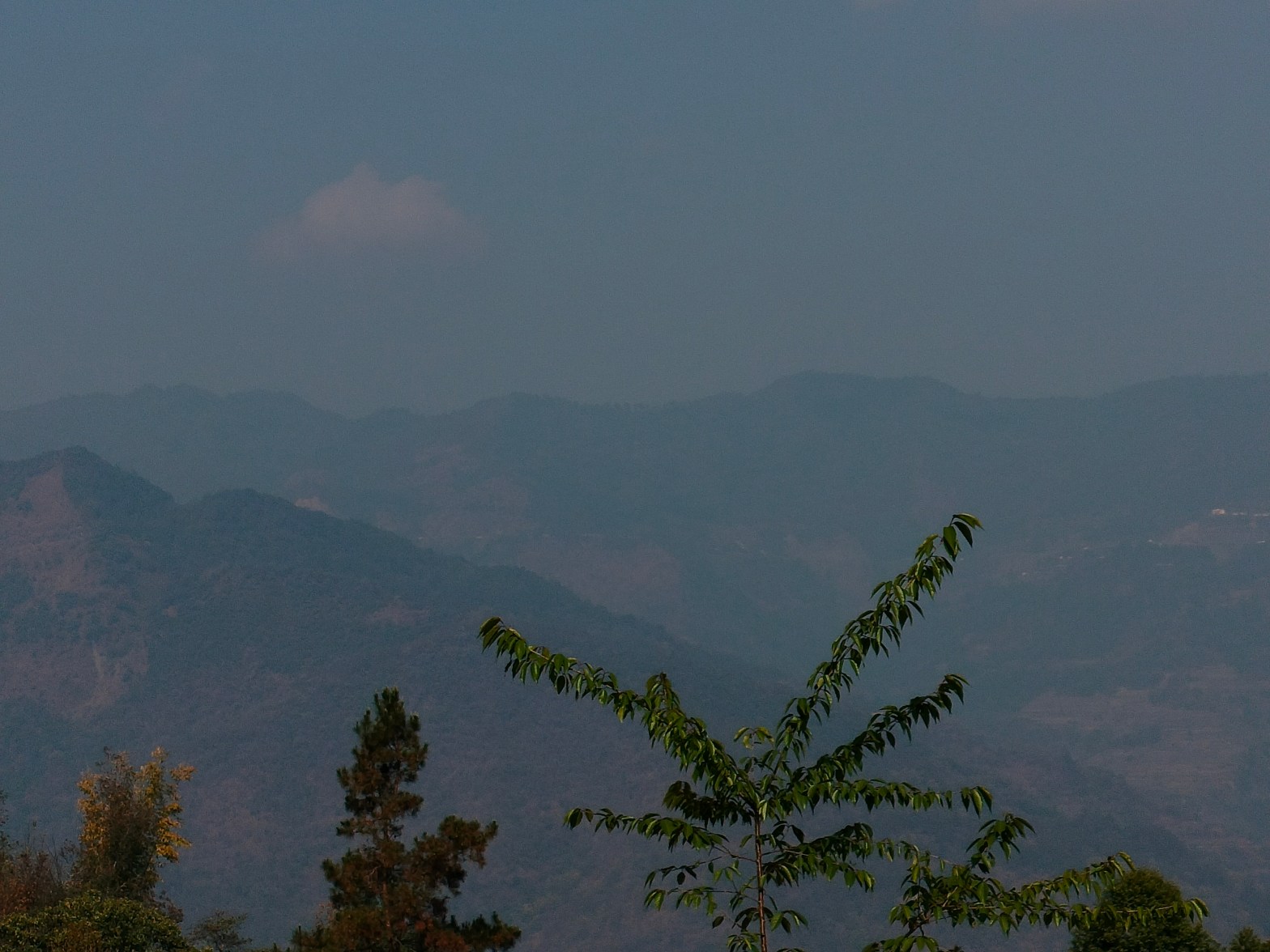
As our car navigated the winding, hilly roads, a rush of crisp, chilly wind carried the scent of freshly bloomed flowers to us. The journey from Dimapur to Chizami spanned five hours, with each turn in the road bringing a sense of excitement to everyone in the car.
Among the travelers were Shrimati Munda, Rita Munda, and Shyamoli Munda, three members of the Munda community from Sundarban. They were on their way to attend the Biodiversity Festival in Chizami, organized by the North East Network, Nagaland.
In this interview series, Shrimati Munda shares her experiences in Nagaland and reflects on their exposure to a new culture and traditions.
Interviewer: Firstly, I would like to know about your experience in Nagaland.
Shrimati Munda: It was wonderful, especially the weather.
Interviewer: You live in the Sundarbans. What new things did you notice and like about Nagaland?
Shrimati Munda: There were many things that caught my attention, but the most remarkable ones were the unique fruits and vegetables. I saw a type of pumpkin that I had never seen before, it looked exactly like a watermelon. At our homestay, I initially mistook it for a watermelon, but when I asked about it, they cut it open and showed me that it was actually a pumpkin. They use it to feed pigs there.
Their traditional clothing also fascinated me.
Interviewer: Could you elaborate on what you found interesting about their clothing?
Shrimati Munda: I was referring to their traditional clothes and jewelry. The bead necklaces, in particular, seemed very attractive and unique to me.
Interviewer: You belong to an Adivasi community, and they also come from an Adivasi background. Did you notice any similarities between your communities?
Shrimati Munda: Yes, there were some similarities. For instance, they eat a lot of pork, just like we do. That was a major commonality. Another similarity was in our languages, I don’t know how, but I could understand some of their words. It was surprising to me.
Interviewer: What was your impression of their organization and work?
Shrimati Munda: Their organization was large and well-disciplined. We listened to their discussions on how they planned to expand it. There were even people from outside Nagaland, including someone from a foreign country. One of them spoke with us, asking about our experience at the event.
They were also engaged in seed preservation. They had a special cold storage room for keeping seeds. We saw different kinds of seeds, mostly local ones, and they shared stories about the early days of their organization, the struggles they faced and the successes they achieved.
We also learned about their seed exchange program and got familiar with the names of different tribes and districts in Nagaland. Their organization gave us a deeper understanding of their work.
Interviewer: Could you relate their work, like seed preservation, to anything in your own community?
Shrimati Munda: Yes, we loved the idea of seed preservation the most. We can definitely adopt it in our region as well. We could preserve different types of seeds like taro roots, kohlrabi, and corn.
We also saw various kinds of edible leaves there. We can preserve those leaves too.
Interviewer: Did their work inspire you?
Shrimati Munda: Yes, a lot! We can implement similar ideas. For example, they collected different kinds of leaves, pasted them onto paper, and wrote their names and functions below each one. We could do something similar in our region as well. Their work was truly impressive.
Interviewer: What about the cultural programs? Did you enjoy them?
Shrimati Munda: Oh yes! I especially loved the drama about their organization’s first visit to Delhi. The scenes with the ticket checker and the police were very entertaining. It was really nice!
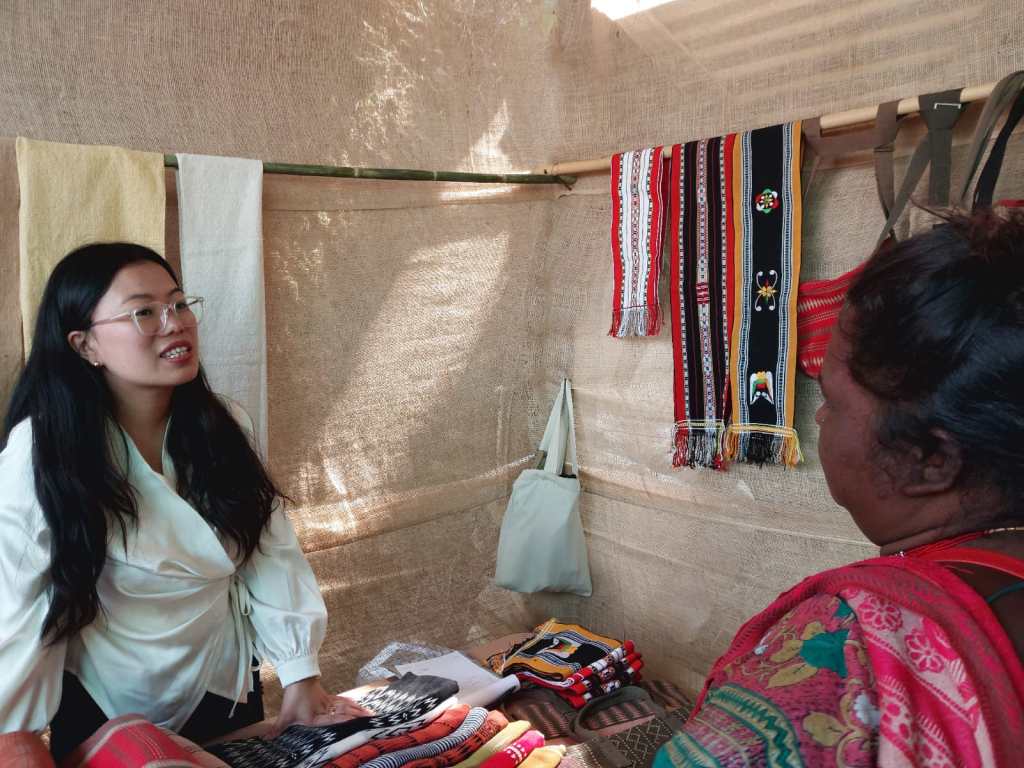
Shrimati Munda at NEN, Biodiversity Festival
 Jaladarsha