Rohan Mukherjee
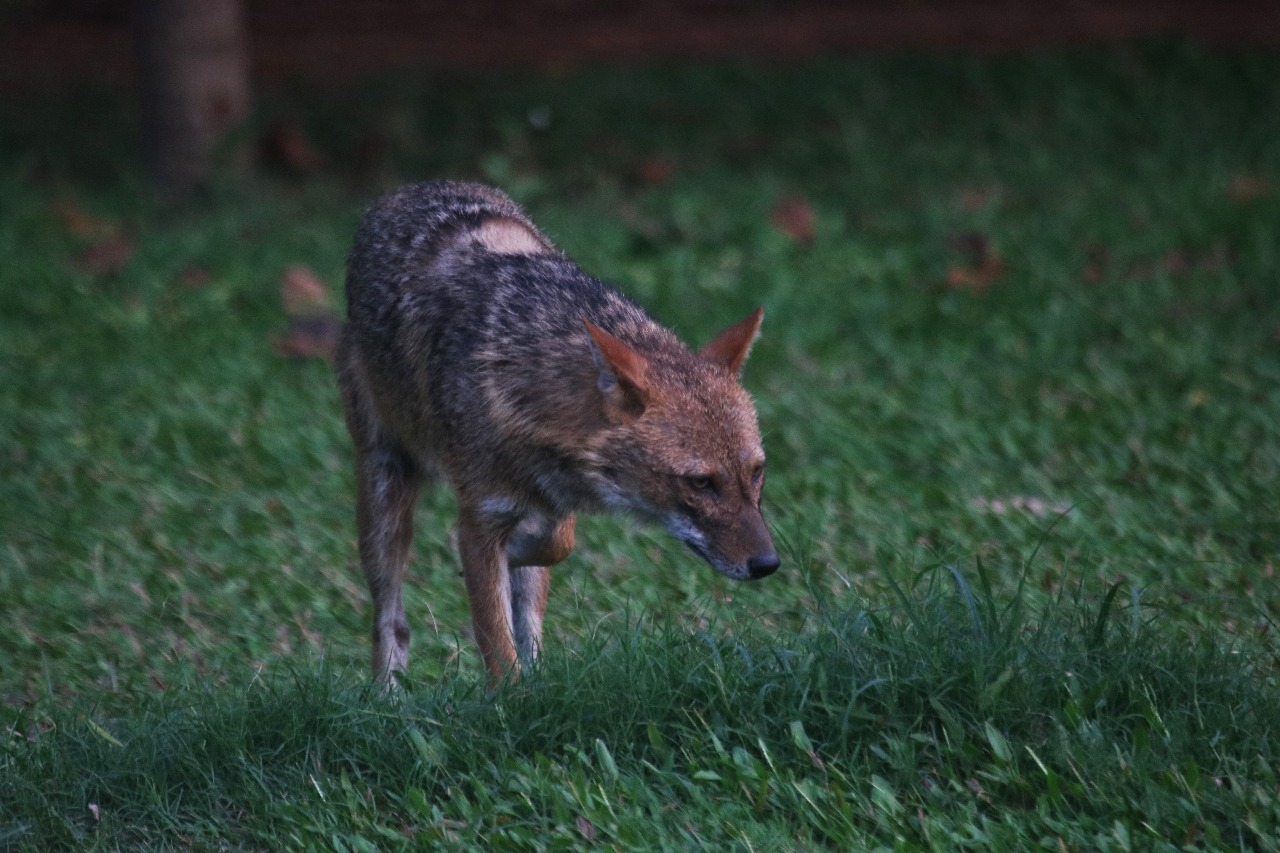
As our cities develop and expand, they often do so with little or no concern for the fate of the wild denizens of these areas. As a result of destruction of natural habitats and the manifold hazards posed by urban life several wild species are lost forever. However, some species are able to hold on longer than others despite their survival being extremely precarious. One such species is the Golden Jackal, possibly Kolkata’s last remaining wild carnivore and one of its last places of refuge is the Tollygunge Club in Southern Kolkata which I have been visiting from my childhood as a result of my father being a member. Tollygunge Club, a remnant of the British Raj, was established in 1895 by Sir William Cruikshank and it currently spans around 100 acres with a sprawling Golf course being one of its most striking features.
The club lies along the eastern bank of Tolly Nullah which was the earlier path Adi Ganga, a channel of the river Hooghly. The soil of the area consisted of the silt brought down by the Adi Ganga and this rich soil combined with generous rainfall supported luxuriant vegetation. This marshy fertile area was prime habitat for the Golden Jackal, who fed on crabs, rodents, and a variety of fruits like mangoes, jackfruit and papaya. The establishment of the Club during Colonial rule towards the end of the 19th century saw the alteration of the vegetation of the area largely to meet the needs of the golf course which saw the setting up of fairways and putting greens and the clearing of vegetation along the boundary wall where the wild animals took shelter. However, with the planting of several species of exotic and indigenous plants and the survival of several water bodies the Club is still home to a rich diversity of flora and fauna which as per Kushal Mookerjee (Birds and Trees of Tolly, 1995) comprises of 118 species of plants, 93 species of birds, 12 species of mammals, 7 species of reptiles and 5 species of amphibians.
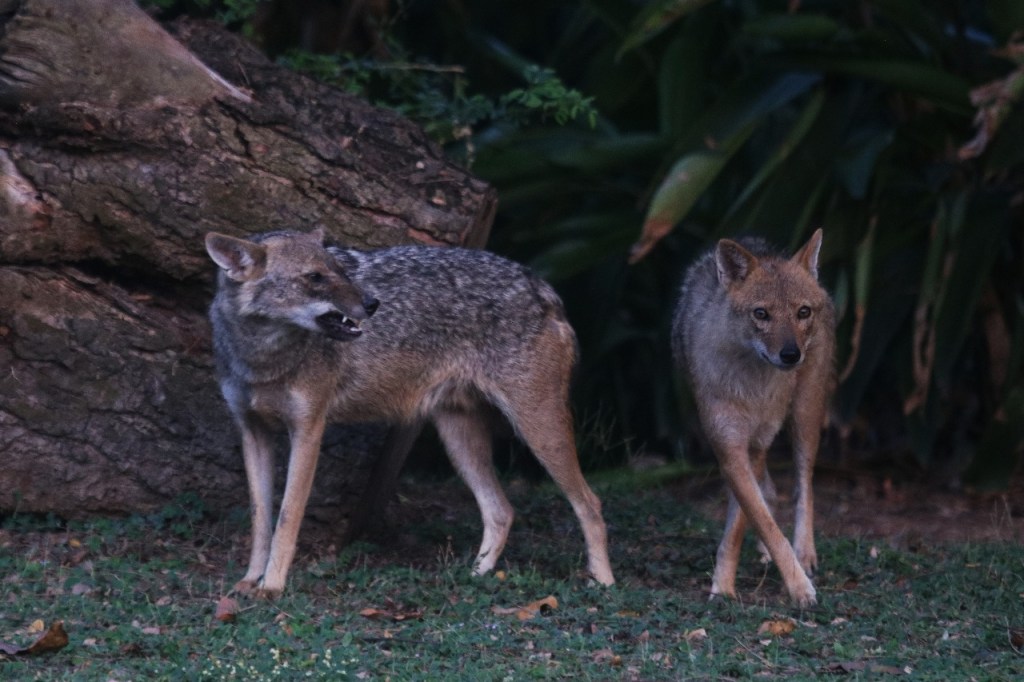
The club activities are mostly confined to the centrally constructed area which is only around 15 % of the total area of the club with only golfers, horse riders and a few walkers frequenting the peripheral areas which to the surprise of most visitors to the club continue to be inhabited by a sizable Jackal population (Sanyal, Dey and Kankane, 2010). As Kolkata expanded and the Tollygunge area was urbanised the Jackals and other wildlife lost much of the natural habitat on which they depended, forcing them to seek refuge within the Club premises. The construction of the Metro and the subsequent walling in of the Club saw the Jackals becoming a virtual captive population. The efforts of concerned members, wildlife enthusiasts and researchers has ensured the protection and survival of Tollygunge Club’s Jackal. However, the characteristics and constraints of their current home have forced them to change and adapt and as a result their behaviour is very different from that of wild Jackal populations.
Unlike wild Jackals who are primarily active in the night, Tolly’s Jackals are now Diurnal and constant contact with humans, especially Golfers and Caddies has made them far more accepting of human presence than their shy wild cousins. They can often be seen accompanying and silently viewing golfers as they make their way from one hole to another. However, their future survival is far from secure with some of the major challenges they face being conflict with the Club’s stray dogs, shrinking prey base and inbreeding and associated greater susceptibility to disease. In fact, many naturalists and researchers feel that in around 20 years Kolkata will lose all of its remaining fragmented Jackal populations primarily as a result of inbreeding and associated genetic issues and challenges.
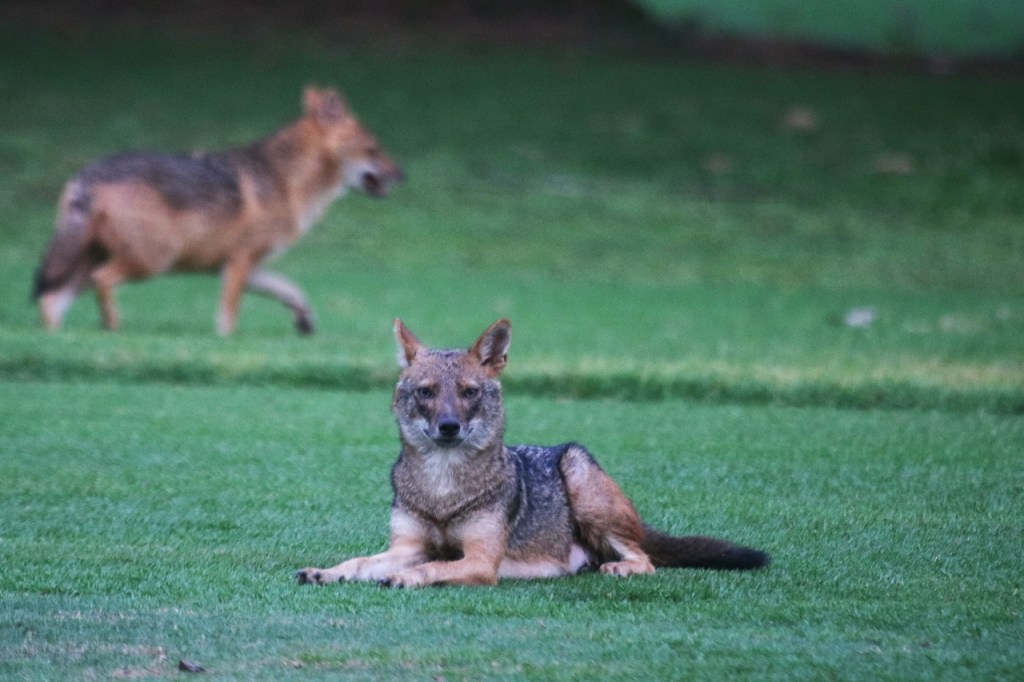
While this is not a story filled with much hope for the future survival of urban biodiversity, what it does highlight is the importance of retaining and protecting natural habitats as our villages, towns and cities develop so that the floral and faunal species of the area are still able to survive and live alongside their human neighbours. While the survival of the Jackal population was far from planned and largely an incidental benefit of having biodiversity conducive golf course, in future there is an urgent need to plan for the protection, conservation and if needed restoration of wild places and natural habitats both within and around our cities alongside sensitisation of citizens of the importance of other life forms and the need to nurture them and ensure our development does not come at the expense of our wild neighbours.
 Jaladarsha