Report by Sanghamitra Mukherjee
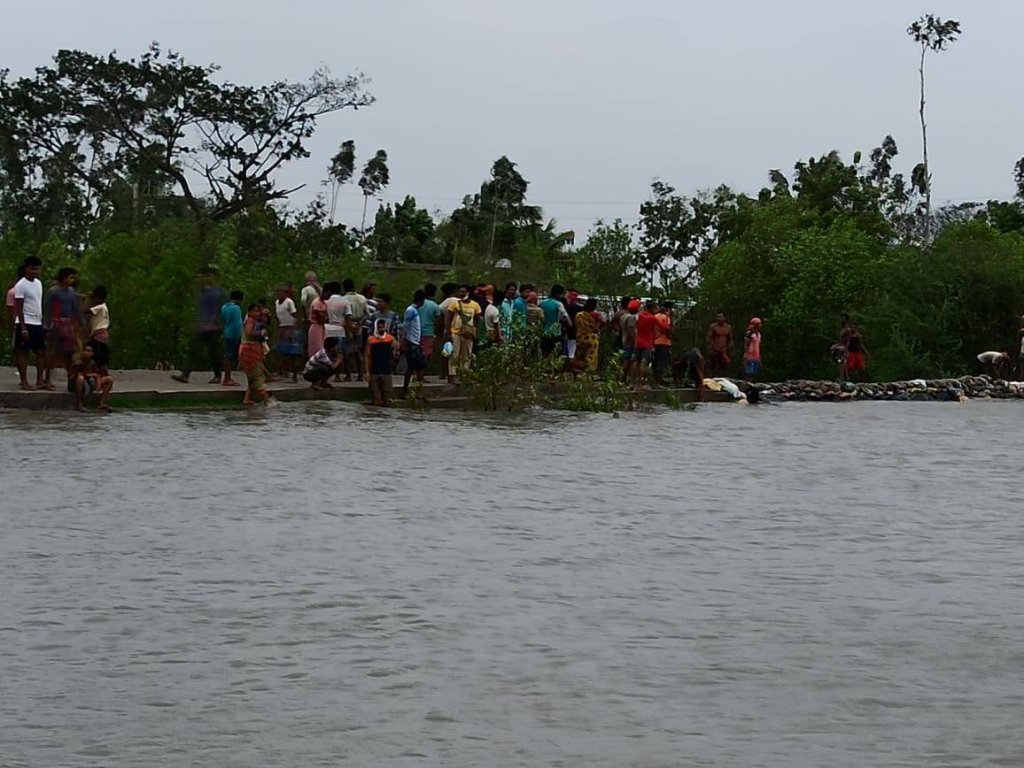
Kalitala is a village in the Sundarban region near the Bangladesh border. The village mostly has been suffering from natural calamities like cyclone and river bank erosion for the past few years. As per our knowledge during the first wave of Covid there were not many active cases that were registered in the village as at that time the situation was not so grave. So things were under control. But at this time now the country is hit by the second wave of Covid, things are much worse here. Initially owing to lack of awareness and disbeliefs regarding the virus, the people were not even ready to accept the existence of the virus. As the symptoms of Covid are quite similar to that of common cold, they remained ignorant of the fact that it could be Covid. Legitimate tests were not done as the only testing centre nearest to the village is Sandeler Bill Block Hospital and it takes around 2:30 hours to reach there.
Upon enquiring the Asha workers and Health workers, our volunteer found out that recently few people from the village tested positive who worked in the forest department. There are a few other active cases in the village as well. Most of the people in the village are having symptoms like cough and cold and other symptoms of Covid but they are not getting tested due to lack of local testing centres. It’s very troublesome for a sick patient to travel for 2:30 hours to get to the hospital.In order to reach the hospital one needs to take a toto from the village to the nearest ferry ghat and from there they need to take a ferry to reach the hospital. Due to the lockdown the ferry ghat is now closed leading to the inconvenience of the people who have no other option to reach the hospital. Hence these sick patients are having to stay at home without proper medication and surveillance. There has been cases of deaths due to heart attack, stroke and various other reasons and none of them were tested. Even when people are getting tested ,the conditions at the health centres are quite substandard. The infrastructure and facilities provided by the local health centres as well the the state hospital are not sufficient to suffice the needs of several villages. According to a patient who was admitted in the hospital, there is no separate washroom for COVID patients and the patients are subject to unsanitary conditions as makeshift arrangements are being made. Availability of oximeter or oxygen cylinders is also scanty as compared to the number of patients they are dealing with. This means that patients have to travel even further, another 4:30 hours to reach a better facility. The village itself has few qualified doctors. There are about four to five quack doctors and the Health workers haven’t been given clear guidelines on monitoring COVID in the village. The Block Medical Officers need to devise separate plans for COVID monitoring in remote locations, given poor infrastructural and transport issues.
When we asked about cremations, we found that cremations are being done anywhere near the houses as the village doesn’t have any crematorium. Thus recording deaths is poor, and the necessary safeguards for COVID deaths are not followed. Since testing facilities are not available, there would be less awareness on COVID illnesses or deaths.
The village frequently suffers from water scarcity during the summer months and it occurred this time as well. Almost 2-3 clusters of the village had to use water from one single water source i.e. a pond to meet their regular needs. This could have led to a health hazard during a time like this, where the chances of contamination from one person to the other is at its peak. But the crisis could be managed after it rained for couple of days. If the monsoon doesn’t arrive on time this year, situation might degrade swiftly. The ponds in the village are not cleaned and maintained regularly. Very often because the people don’t have resources. Due to losses in the previous year during Amphan, the government or Fisheries Department could help people clean and maintain their water bodies under the WASH(Water Sanitation and Health), given the urgent need for water and washing in these times.
The other problem that was identified by our volunteers is the concern regarding money. Due to the lockdown, people mostly have to depend on net banking systems and banks more than often. Hence the banks and ATM’s are getting overcrowded as there is only one or two banks or ATM’s near the village. People can be found there without wearing masks and standing in close proximity due to lack of awareness and knowledge which might increase the chance of getting infected and rise in the number of active cases.
Yesterday the area was met with a new challenge, cyclone Yaas which hit West Bengal and Odisha. Being a low lying area the village gets inundated. This means that people need to move to flood centres. But during times like this it might lead to more contamination and increase in cases. There were no clear COVID protocols given in flood centres. Our volunteers however asked people to wear masks at all times at the centre. They distributed masks, tried to recommend people stay in family clusters at the centre, and provided soaps and sanitisers so people may stay clean at the centre. However given the crowding that will take place, it is imperative that the health department along with block and gram panchayat officials try to put in place adequate health and sanitation measures there. For example, the Panchayat was seeking resources for a COVID safe home, 100 beds in the area itself.
Since the pandemic has struck, the people dependent on mono agricultural farms / migrant labourers are not being able to travel to other cities due to job scarcity leading to financial crisis amidst the pandemic. They are unable to afford even the sanitisers which are the bare minimum. Affording proper healthcare is a far fetched idea for them. Rations for people and health kits need to be distributed in the area.
With all being mentioned, there is a need for proper intervention by the government or the healthcare department to meet the crisis by assigning teams to these small forlorn villages which can administer the situation over there. Situation can improve if :
1) the availability of testing centres is increased
2) the number of testing done in the village is increased
3) the local health centres are made well equipped for managing the initial stage of covid
4) the transportation is well organised(emergency ambulance)
5) telemedicine service is provided
6) awareness campaigns by health workers.
7) new disaster management protocols during covid.
8) Flood centres are sanitised and cleaned
9) water bodies are cleaned and maintained
10) some basic facilities and training on tackling COVID needs to be given to health workers at the village level
 Jaladarsha