The East Kolkata Wetlands (EKW) are one of the world’s most remarkable examples of a city and its ecology working together. Designated a Wetland of International Importance under the Ramsar Convention in 2002, the EKW quietly performs a feat few urban systems can claim: it takes Kolkata’s sewage and, through entirely natural processes, transforms it into the lifeblood of a thriving aquaculture and agriculture economy that feeds the metropolis. Its role in the city’s sanitation system is, in a word, unparalleled.
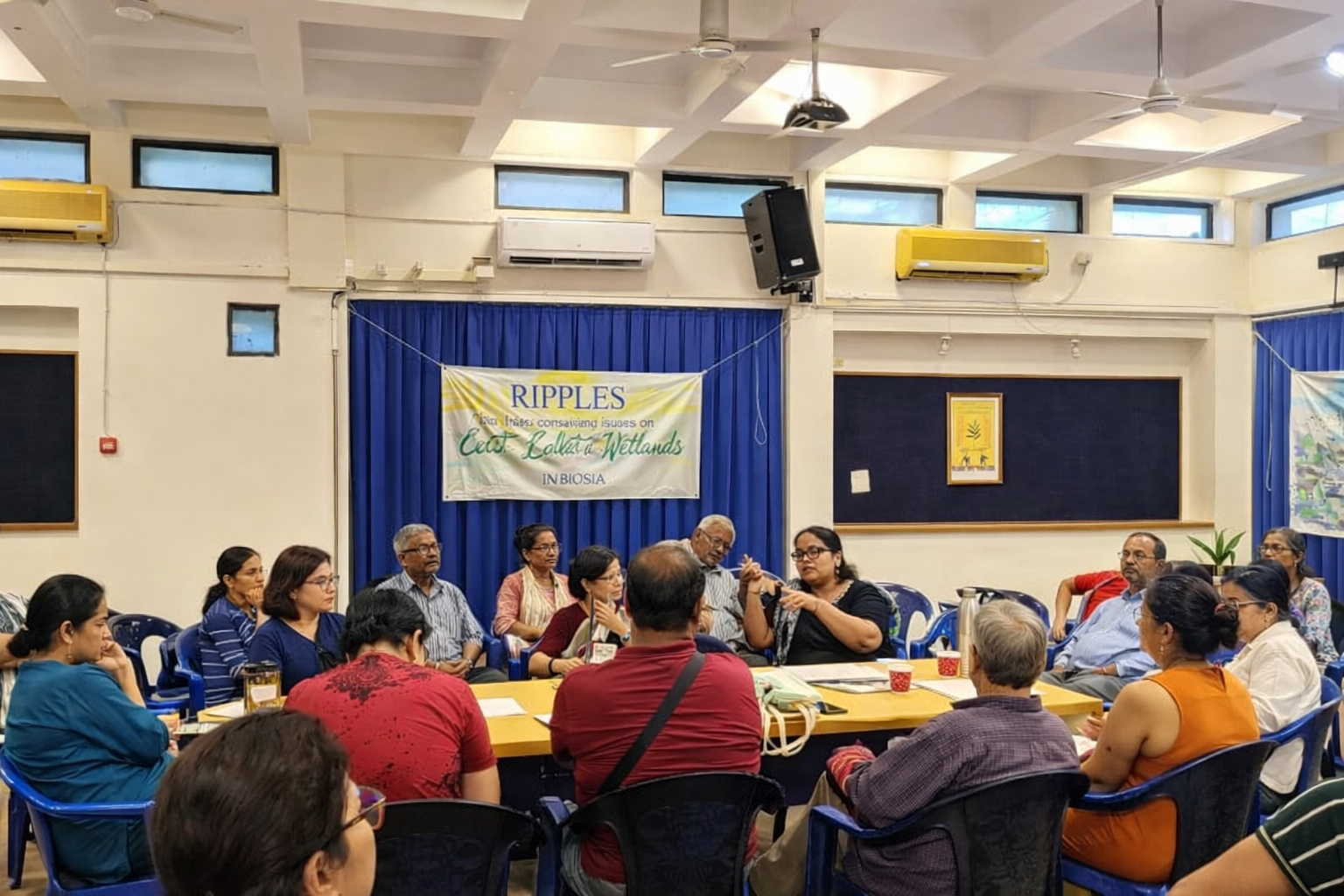
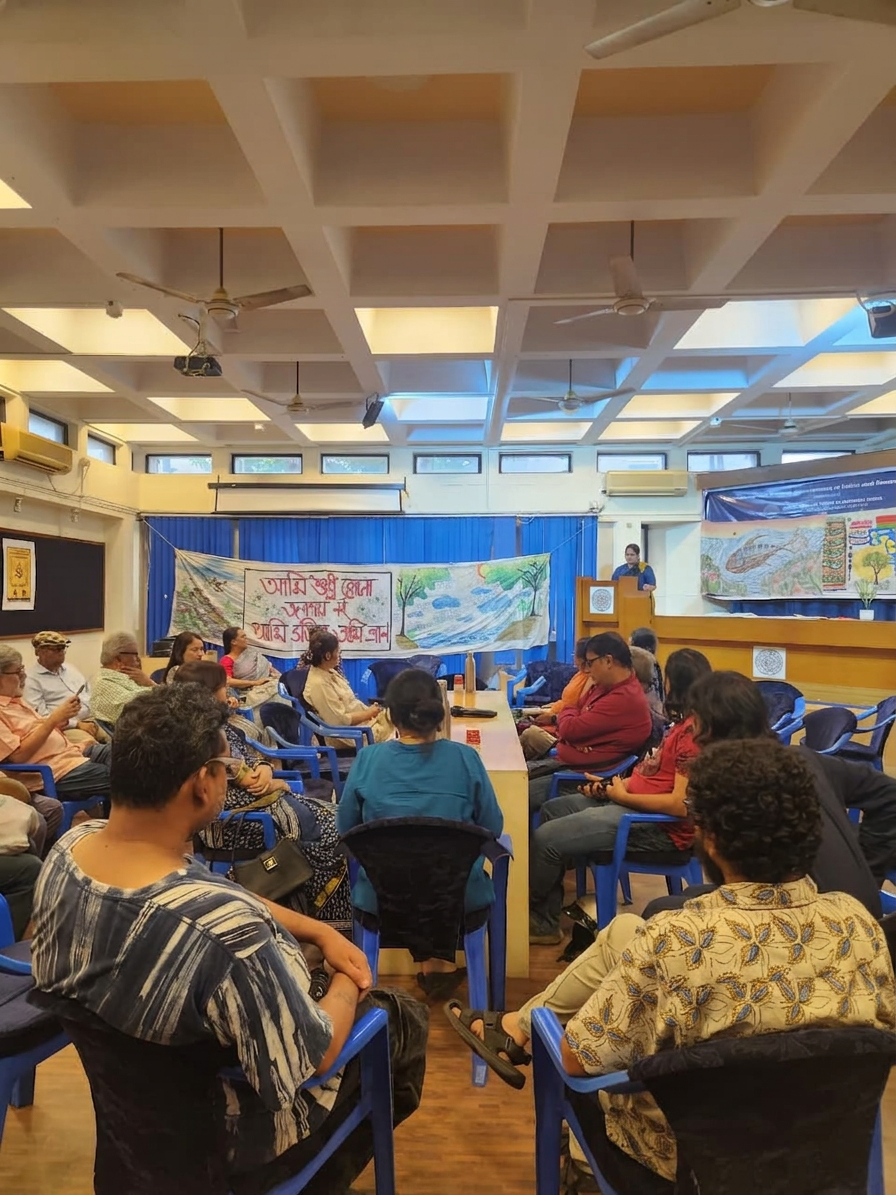
And yet, for all the research documenting the EKW’s ecological decline, a clear path toward sustainable intervention has remained elusive. On 19th July 2025, Jaladarsha convened an intergenerational roundtable at the Institute of Town Planners, India, West Bengal Chapter, bringing together environmental researchers, town planners, legal experts, artists, and citizens to confront this gap. What emerged was less a set of answers than a rich, sometimes contested, conversation—one that suggests the EKW’s survival depends on governance robust enough to hold competing forces in balance while genuinely validating community stewardship.
A Legal Loophole Eating Away at the Wetlands
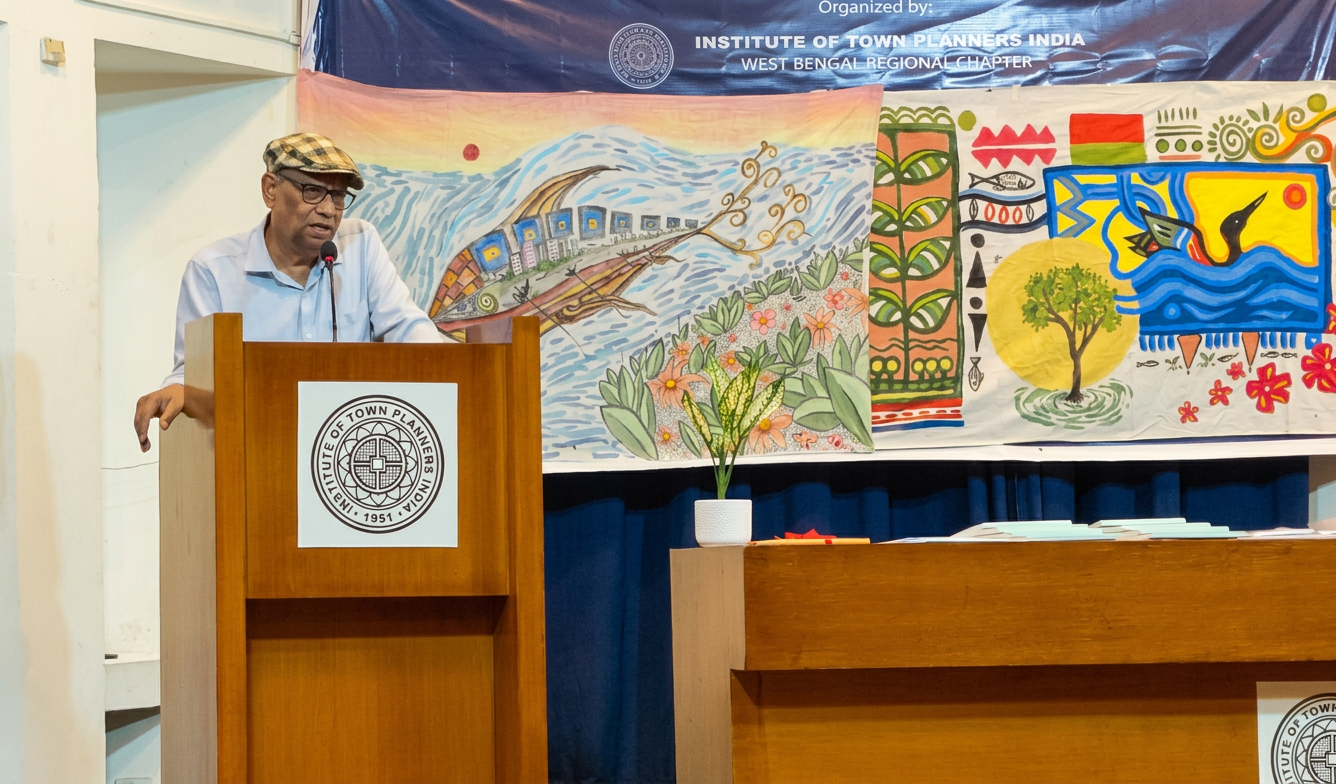
The most immediate threat to the EKW is disappearance—water bodies quietly converted through land-use change. Dipankar Sinha of the Institute of Town Planners, India, laid out the legal history behind this, tracing the trajectory from the West Bengal Fisheries Act to this day. He pointed to a telling contradiction: while current law protects smaller water bodies from conversion, another provision requires that any water body identified as a mosquito-breeding site be filled in. Several participants noted the obvious risk — this clause can become a convenient justification for filling in wetlands to make way for commercial development.
Citizen cyclist Anuradha Pathak backed this up with what she’d seen on the ground: a rapid spread of eateries and other constructions, their commercial appeal built — ironically — on the very wetland scenery they’re steadily erasing. Her critique cut to the heart of an unresolved tension: tourism is growing here, but without any real conservation framework behind it.
What Do We Even Call This Place?
Beneath the physical threats lies a deeper question — what is the EKW, really? Mohit Ray challenged the very word “wetland,” arguing it’s an imported term that doesn’t capture what this landscape actually is. For local communities, these are not abstract “wetlands” in the conservationist sense — they are bheris, integrated systems for fishing, bathing, and irrigation, woven into daily life and cultural practice. He noted that by official mapping, only 40% of the area is classified as wetland, with the rest as agricultural land, bheris, and more—and that while the law prohibits any reduction in water area, it permits changes to the character of the land, a distinction with real consequences.
Professor Tapan Saha opposed this point by Mohit Ray, invoking the Ramsar Convention’s explicit prohibition on any change to a designated site’s ecological character and as per the law on management of the East Kolkata wetlands. The resulting exchange between Saha and Ray was never quite resolved — Ramsar’s universal definition of “wetland” versus the case for something more culturally and contextually grounded. Saha, drawing on over a decade of working in the area, described the indigenous knowledge behind operating the gates that regulate sewage flow into the bheris — a quiet reminder of just how much community wisdom is doing double duty here: sustaining livelihoods while properly disposing of Kolkata’s waste.
When the Periphery Poisons the Core
Samaresh Guchhait brought a longer view, tracing the dramatic expansion of the Bantala Leather Complex since 2009–2010 and alleging that its effluent treatment plants are dysfunctional, sending untreated chemical pollutants into the canals feeding the wetland’s core. His point was structural: damage at the periphery doesn’t stay at the periphery—understanding EKW’s degradation requires a wider lens. Ujjal Mukherjee sharpened this further, arguing the conversation should move past generic “pollution” talk toward the specific, traceable heavy metals used in tanning, and toward hard questions about whether environmental protocols are actually being enforced.
Health, Knowledge, and a More Complicated Picture
The discussion on health resisted easy narratives. Sanitation workers at the Dhapa landfill face well-documented occupational hazards — but the picture for those working in the bheris was more nuanced. Nobina Gupta, whose organization Disappearing Dialogues works directly with these communities, described fishery workers as highly deliberate in managing sewage-fed ponds, using techniques like liming and drying to reduce health risks. She and Mohit Ray also pointed to the medicinal plants found throughout the EKW — evidence, perhaps, of a co-evolved system in which traditional ecological knowledge actively supports community health.
Community as the First Line of Defense
Again and again, the roundtable circled back to one idea: the EKW’s deepest protection isn’t policy—it’s the place-based knowledge of the people who live and work there. Rahul Ganguly of DISHA offered a striking illustration, recalling the late environmentalist Dhrubojyoti Ghosh’s unusual legal fight. Ghosh didn’t petition to stop pollution — he petitioned to ensure enough nutrient-rich sewage reached the bheris through the Bantala lock gate. It’s a small detail that reframes the entire system: the EKW isn’t an untouched wilderness. It’s a managed, nutrient-recycling ecosystem, and it needs to be understood—and protected—as exactly that.
Fragility, in Focus
Artist Koustabh Chakraborty offered the word “ecotone” to describe the wetlands—a place where land and water genuinely coexist. He shared a small, haunting memory: two water hens standing on a scrap of thermocol, pecking food out of a plastic bag floating in the water. A quiet, devastating image of an ecosystem’s pollution and fragility, distilled into a single moment.
Bonhi Chakraborty widened the historical frame, drawing on Salt Lake’s transformation from waterscape to urban-industrial zone as a warning of where the EKW could be headed. Having watched that erosion happen once already, she argued that truly understanding the wetlands requires deeper study of their biodiversity—their fish populations, its aquatic systems—and called for expanded research, along with a real reckoning with the water bodies already lost.
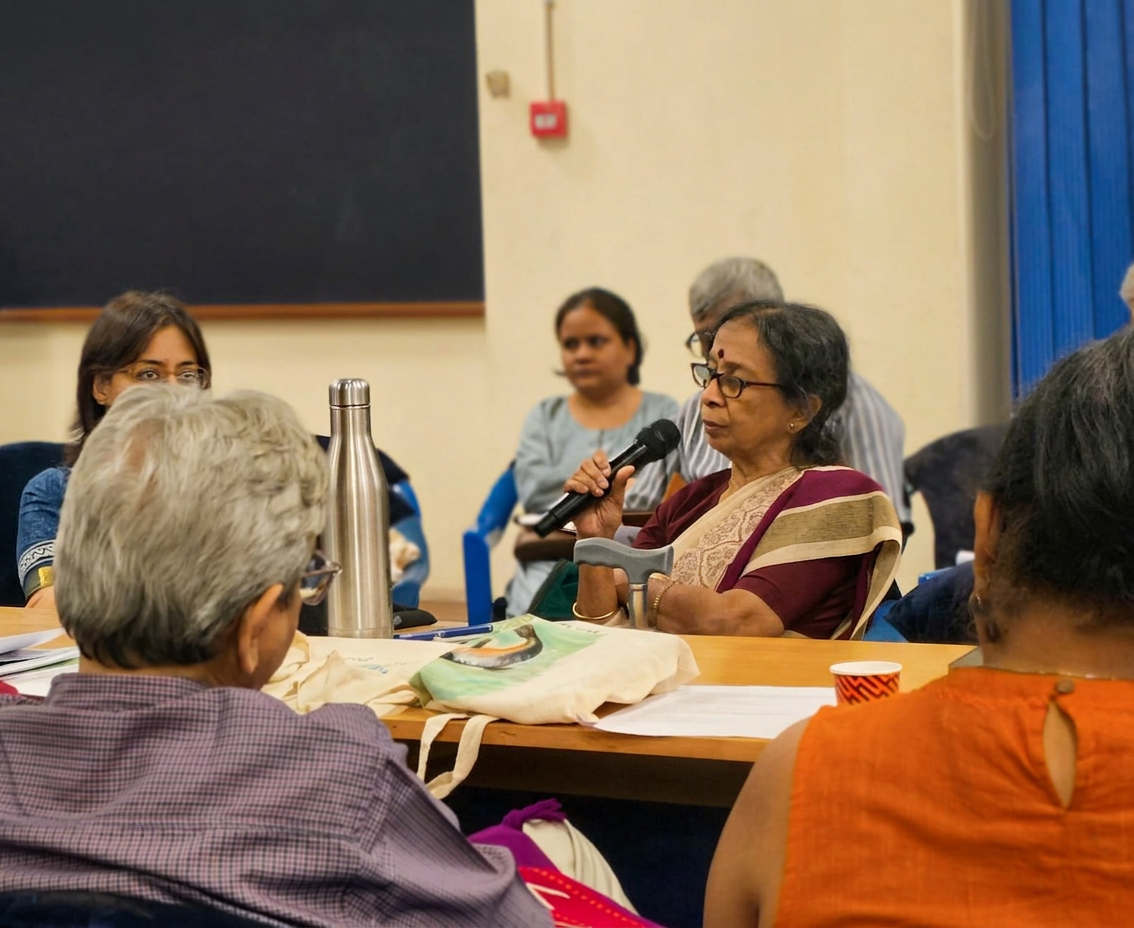
Researcher Alokananda added a more unsettling layer, drawing on her PhD work to suggest that the apparent absence of grievances among local communities might not be innocence at all — it could be a calculated position, shaped by powerful political backing. It’s a reminder that the people of the EKW aren’t simply passive stakeholders; they operate within — and sometimes leverage — complex networks of power.
A Precarious Symbiosis
What the roundtable ultimately revealed is a wetland caught between two economies: a circular one, built on recycling waste into life, and a linear one, driven by industrial pollution—with community resilience caught in the middle, tested by political and commercial pressure from every side.
If the East Kolkata Wetlands are to survive, the roundtable suggests, something more fundamental has to shift: away from treating the EKW as a collection of water bodies in need of protection and toward recognizing it for what it actually is — a living, human-managed ecosystem, sustained as much by knowledge as by water.
Report by Adrija Bhattacharya
Photography: Priyanka and Akash

