Dr. Bedaprana Roy and Ramesh Mondal
Based on the six farmer interviews from Hingalganj, a remarkably clear picture emerges of agroecological transition, climate vulnerability, and the realities of smallholder farming in the Indian Sundarbans. The six respondents represent a spectrum ranging from committed organic farmers to hybrid farmers combining chemical and organic practices, as well as highly constrained farmers whose choices are largely determined by environmental conditions rather than ideology. In a location as ecologically vulnerable as the Sundarbans, the interviews provide interesting insight into how, in times of distress, ideologies of sustainability supersede momentary solutions that may have probable negative future impacts.
Introduction
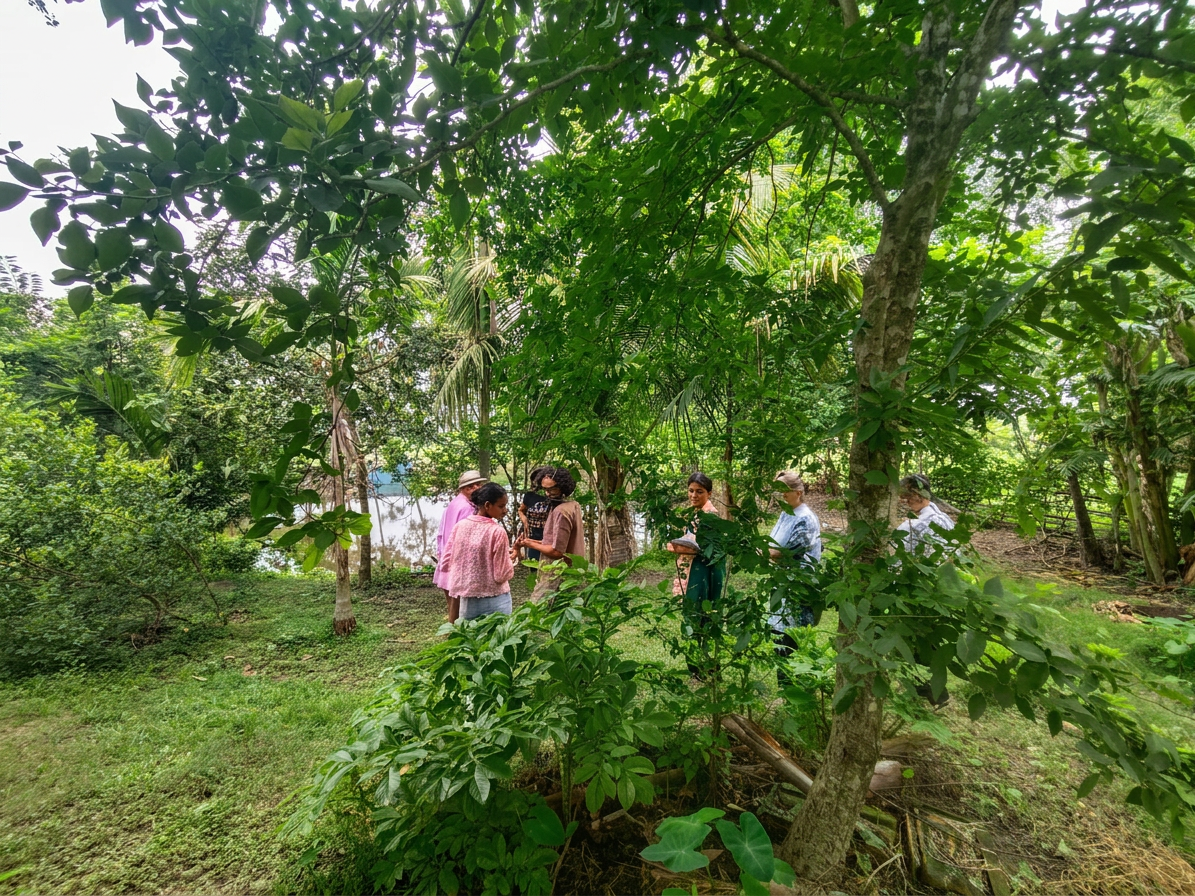
As part of the study on agroecological transitions and climate resilience in the Indian Sundarbans, six in-depth interviews were conducted with farmers from different villages of Hingalganj Block. The respondents included both male and female farmers from diverse socio-economic backgrounds, varying landholding sizes, and different levels of engagement with organic and conventional agricultural practices. The interviews explored farming systems, perceptions of organic agriculture, climate-related challenges, livelihood strategies, institutional support, and future aspirations.
The findings reveal that farming in the Sundarbans is not characterised by a simple division between organic and chemical agriculture. Rather, farmers occupy different positions along a continuum influenced by ecological constraints, access to knowledge systems of sustainable practices, economic pressures, family traditions, market realities, and government policies.
Farmer Profiles
The six respondents were Anita Munda (32 years), Binay Barman (63 years), Murari Mandal (46 years), Prasad Ray (53 years), Ranjit Munda (51 years), and Sajal Baidya (68 years). Their farming experience ranged from approximately 10 years to nearly five decades. Landholdings varied from small leased plots (3 Bigha) to larger owner-operated farms (10 Bigha). Most households practiced mixed farming systems combining crop cultivation with livestock rearing and, in several cases, fish culture.
A notable feature across all interviews was the prevalence of diversified livelihood strategies. In addition to agriculture, households often depended on wage labour, migration, small businesses, or livestock to supplement income. Anita Munda’s husband works as a migrant labourer, while Murari Mandal drives an engine van and Prasad Ray operates a tea stall alongside farming activities. These livelihood combinations indicate that agriculture alone is often insufficient to sustain household economies.
Agricultural Systems and Farming Practices
All respondents cultivated paddy as their principal field crop. A clear indication of market-imposed agricultural practices that barely cater to the nutritional needs of the families. Most also maintained homestead vegetable gardens and reared livestock such as cows, goats, poultry, and ducks. Fish culture was common among households with ponds.
The interviews demonstrate varying levels of agricultural integration. Farmers such as Anita Munda and Prasad Ray maintain diversified homestead systems in which vegetables, livestock, fish, and poultry contribute to household nutrition and to resource recycling. However, the most sophisticated example of integrated farming was observed in the case of Sajal Baidya. His farm integrates paddy, vegetables, fish, livestock, and beekeeping into a consciously designed agroecological system in which animal waste, crop residues, and biological processes are actively managed to sustain productivity and soil health. But again, Sajal Baidya is known as one of the pioneers of agroecological and sustainable farming practices in his area, with access to knowledge systems that might be far beyond the reach of the commons. Sajal Baidya’s interview demonstrates that successful agroecological farming is possible in the Sundarbans through a combination of traditional knowledge, continuous learning, and strong ecological values. His long-term commitment has been sustained by family traditions, formal training from agricultural experts and institutions, support from NGOs through seeds, equipment, and technical guidance, and a deep belief in maintaining soil health, biodiversity, and human well-being. Despite repeated climate disasters such as Aila, Bulbul, and Amphan, he has continued practicing integrated organic farming by adapting traditional seed conservation and ecological management practices. However, this commitment has come with significant challenges, including the loss of traditional seeds, increasing salinity and climate impacts, contamination from neighbouring chemical farms, and the absence of price premiums for organic produce, making his continued dedication to agroecology a reflection of both resilience and conviction rather than economic advantage.
Most farmers select crops according to local environmental conditions, including sunlight availability, soil conditions, water availability, and seasonal variation. This demonstrates the existence of considerable ecological knowledge acquired through experience and observation.
Understanding and Practice of Organic Farming
The interviews reveal considerable variation in how farmers understand organic agriculture.
For most respondents, organic farming is associated primarily with the use of natural inputs such as cow dung, goat manure, leaf compost, ash, crop residues, and decomposed household waste. Organic farming is therefore often understood as an input substitution strategy rather than a comprehensive agroecological approach.
Anita Munda represents a household that practices organic vegetable cultivation while continuing to use chemical fertilizers in paddy cultivation. Her motivation is strongly linked to family health and food safety. Vegetables grown for household consumption are kept free from chemical inputs, while market-oriented crops continue to rely on conventional practices.
Similarly, Binay Barman, Murari Mandal, Prasad Ray, and Ranjit Munda all combine organic and chemical inputs to varying degrees. These farmers generally use organic manures to maintain soil fertility while relying on chemical fertilizers and pesticides to ensure crop yields and manage pest pressures.
In contrast, Sajal Baidya stands out as a dedicated agroecological practitioner. He has consciously avoided chemical agriculture for decades and views farming as a relationship between soil, biodiversity, human health, and ecological well-being. His approach reflects a holistic understanding of agroecology rather than merely substituting inputs.
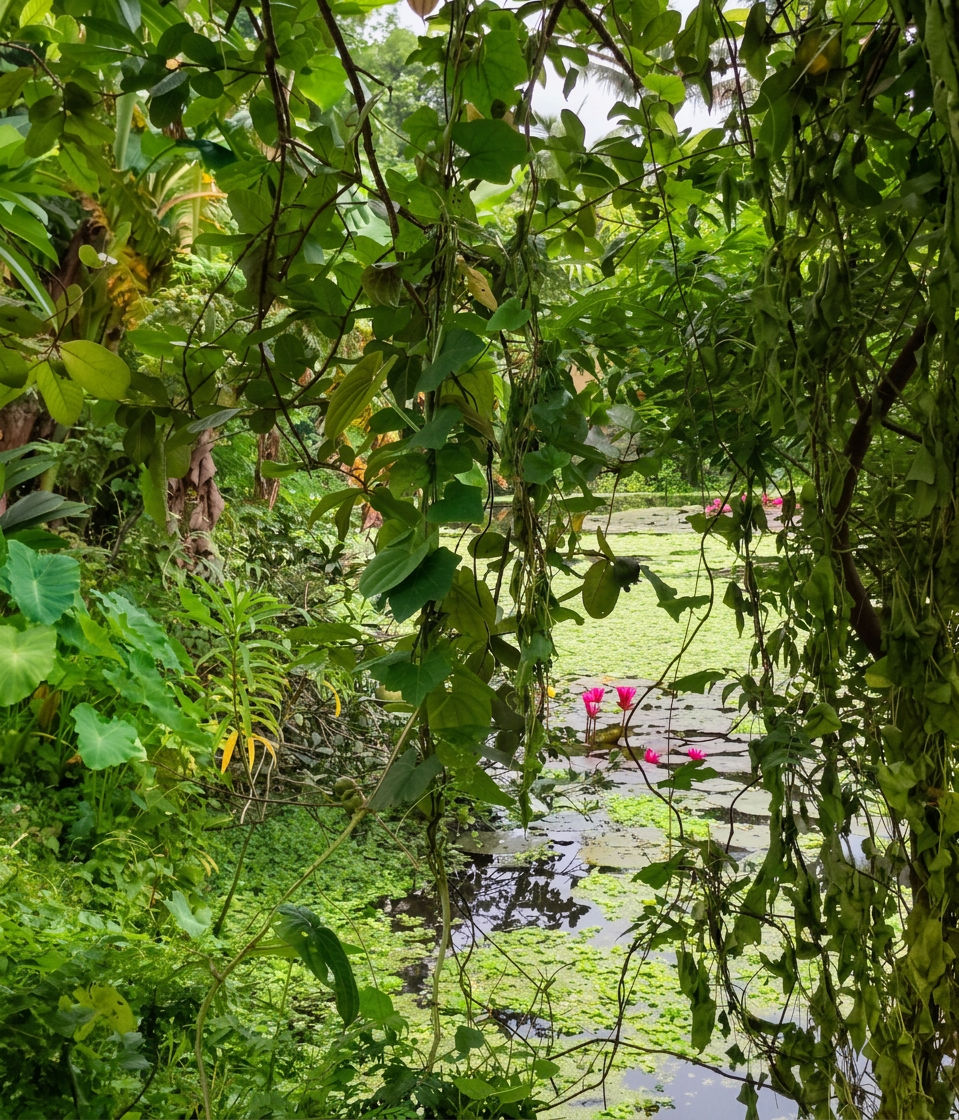
¹ Comprehensive agroecological approach: An integrated farming system that applies ecological principles across the entire farm by combining crop diversity, livestock, fisheries, biological nutrient recycling, traditional seed conservation, natural pest management, soil health restoration, biodiversity conservation, and climate-adaptive management practices. Rather than replacing chemical inputs with organic alternatives alone, this approach seeks to strengthen the ecological interactions between different farm components to improve productivity, resilience, and long-term sustainability.
Knowledge Systems and Learning Pathways
Traditional knowledge remains the dominant source of agricultural learning among most respondents. Farmers frequently cited parents, neighbouring farmers, and practical experience as their primary sources of knowledge.
At the same time, NGO interventions have played a crucial role in promoting agroecological practices. Jaladarsha, Janakalyan Sangha, and other organizations have provided training, seeds, and technical support to several respondents. Anita Munda specifically highlighted the value of indigenous seeds and training received from Jaladarsha. Binay Barman and Ranjit Munda reported similar support.
Sajal Baidya’s trajectory illustrates the transformative potential of sustained capacity building. His training through agricultural institutions and interaction with experts such as Dr. Kanailal Bhowmik, Dr. Anupam Pal, and Debal Deb significantly shaped his commitment to traditional varieties and ecological farming practices.
Climate Change and Environmental Challenges
Climate-related stresses emerged as the most significant challenge across all interviews.
Flooding, cyclones, salinity intrusion, drainage problems, excessive rainfall, and freshwater scarcity were repeatedly identified as major constraints to agricultural production.
The respondents consistently reported that climate-related hazards have intensified over time. Farmers recalled increasing frequency and severity of cyclones, more erratic rainfall patterns, prolonged flooding, and growing salinity problems. These observations closely align with broader scientific assessments of climate vulnerability in the Sundarbans.
Salinity emerged as one of the most severe ecological constraints. Ranjit Munda reported that vegetable cultivation is only possible during the monsoon because salinity affects soil and water availability throughout the rest of the year. Murari Mandal and Prasad Ray similarly emphasized the impacts of saline water intrusion following cyclones and embankment breaches.
Many respondents identified inadequate drainage infrastructure as a critical barrier. Poor drainage leads to waterlogging during the monsoon while simultaneously contributing to freshwater scarcity during summer months.
Adaptation and Coping Capacity
A striking finding is the limited adaptive capacity among most farmers.
The majority of respondents described their response to environmental shocks as largely reactive rather than proactive. When floods or saline water enter agricultural fields, many farmers simply suspend cultivation until conditions improve. This was particularly evident among Binay Barman, Murari Mandal, Prasad Ray, and Ranjit Munda.
Only Sajal Baidya described deliberate adaptation measures, including the use of salt-tolerant varieties, management of saline pond water, seasonal planning, and diversification strategies. His case demonstrates how knowledge, experience, and institutional support can enhance adaptive capacity.
The interviews suggest that adaptive capacity is strongly influenced by access to knowledge, resources, and networks rather than by environmental conditions alone.
Economic Considerations and Market Constraints
Economic considerations strongly shape farming decisions across all households.
Farmers consistently reported that organic products receive no price premium compared to conventionally produced crops. This was identified as one of the biggest barriers to agroecological transition. Farmers perceive that adopting organic methods may reduce yields while offering no corresponding economic benefit.
The absence of differentiated markets creates a significant disincentive for farmers considering a transition toward more sustainable practices. Several respondents explicitly stated that low yields, pest management difficulties, and lack of market recognition discourage wider adoption of organic farming.
At the same time, farmers recognized important economic advantages associated with reduced input costs, particularly for homestead production. Organic vegetable cultivation was often valued because it reduced household expenditure and improved food quality.
Another finding involves some disturbing realities; for example, the use of organic inputs for the production of crops for home consumption and the use of chemical inputs for the crops intended for market sales (from the interview with Anita Munda). This idea of the need for increased productivity instead of harvest quality to augment farmer incomes has effects beyond the markets and has major impacts on the general consumers with minimal access to information about farming practices utilized in the development of the final product and the neglect in the understanding of the need for balance in health priorities of consumers and economic priorities of farmers.
Perceptions of Agroecological Transition
The interviews reveal five broad categories of farmers.
- First, Sajal Baidya represents an agroecological pioneer who has fully integrated ecological principles into farming practices.
- Second, Anita Munda represents a subsistence-oriented agroecological farmer focused on family nutrition and household health.
- Third, Binay Barman and Prasad Ray represent hybrid farmers who combine organic and chemical practices while balancing production needs and environmental concerns.
- Fourth, Murari Mandal represents a yield-oriented conventional farmer who prioritises production and sees little incentive for major change.
- Finally, Ranjit Munda represents an environmentally constrained farmer whose options are severely limited by salinity, freshwater scarcity, and livelihood insecurity.
Cross-Cutting Findings
Several themes were common across all interviews:
• Climate stress is the dominant challenge affecting agricultural production.
• Salinity and water management are critical constraints.
• Government support is largely absent, while NGOs play an important role.
• Traditional knowledge remains highly significant.
• Farmers widely perceive organic farming as having lower yields.
• Lack of market incentives discourages agroecological transition.
• Integrated farming systems are already common and provide a foundation for agroecological development.
• Most farmers express concern about soil health and environmental degradation.
• Adaptive capacity varies significantly between households.
Conclusion
The six interviews demonstrate that the agroecological transition in the Sundarbans is neither linear nor uniform. Farmers occupy diverse positions along a continuum shaped by ecological realities, livelihood needs, access to resources, and knowledge systems. While interest in sustainable farming practices exists across all categories of farmers, the transition remains constrained by environmental vulnerability, market failures, institutional gaps, and persistent concerns regarding productivity.
The findings suggest that future interventions should focus on strengthening farmer training, promoting locally adapted agroecological practices, improving drainage and freshwater management, supporting seed systems, creating differentiated markets for organic products, and enhancing climate resilience at the community level. Building upon existing farmer knowledge while addressing structural barriers will be essential for advancing sustainable and resilient agricultural systems in the Indian Sundarbans.
Pictures by : Bedaprana and Priyanka

